
4

Hey there, readers!
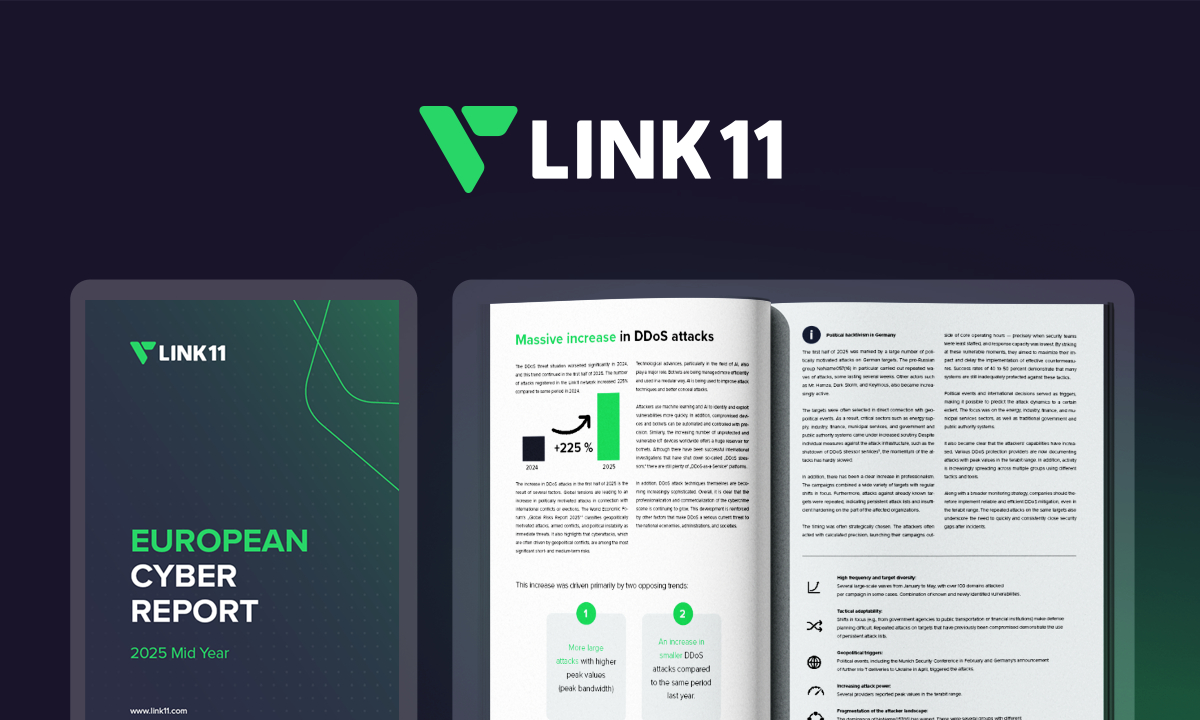
Have you heard about the latest buzz in cybersecurity? The threat landscape for distributed denial-of-service (DDoS) attacks has been heating up in the first half of 2025. According to the recent Link11 European Cyber Report, attacks targeting the Link11 network have surged by a whopping 225% compared to last year. Not only have the attacks increased in frequency, but they have also become more intense, lasting longer and showcasing advanced technical tactics. Attackers are now using volumes of data equivalent to over seven years of continuous 4K Netflix streaming and are employing Layer 7 attacks that mimic legitimate user traffic. The report also sheds light on politically motivated campaigns, with groups like NoName057(16) targeting critical infrastructure.
Unprecedented Numbers: Massive Data Volumes and Prolonged Attacks
In the first half of 2025, the total volume of attacks reached a staggering 438 terabytes. To put that into perspective, it’s equivalent to streaming 4K Netflix content non-stop for 7 years. The peak values recorded were 1.2 terabits per second and 207 million packets per second, which can overwhelm even high-performance systems.
Moreover, the duration of attacks has increased significantly, with the longest one lasting over 8 days. This shift towards sustained, long-term campaigns poses new challenges for defense systems.
Evolution of Attacks: Precision Over Brute Force
While traditional volumetric attacks still prevail, Link11 analysts have noticed a rise in precise Layer 7 attacks. These attacks cleverly blend in with legitimate traffic, making it harder to detect them.
“When hidden within normal traffic, 20,000 seemingly genuine requests per minute can be more harmful than 200 million packets per second,” explains Jag Bains, VP Solution Engineering at Link11.
Geopolitical Motivations and Critical Infrastructure
The correlation between geopolitical events and attack waves is striking. Groups like NoName057(16) have been targeting government agencies, banks, energy providers, and city administrations in Europe. These attacks often coincide with key security decisions. Other groups like Dark Storm and Keymous are also gaining prominence.
“The scale is alarming. In the first half of 2025, we witnessed a total of 438 terabytes of DDoS traffic on the Link11 network. That’s more than 7 years of non-stop 4K Netflix streaming. Analogies like this paint a vivid picture of the threat,” says Jens-Philipp Jung, founder and CEO of Link11. “European businesses must prioritize resilient defense strategies to safeguard their digital assets.”
Rise of Crime-as-a-Service and AI
Attacks are not just getting bigger and longer; they are also becoming more organized. Attackers are collaborating more, using DDoS-as-a-service platforms and AI to enhance and disguise their attacks. The World Economic Forum identifies this automation as a key factor shaping the cybersecurity landscape in 2025.
Building Resilience Over Reactive Measures
The report emphasizes the need for companies and institutions to bolster their security frameworks continuously. This includes:
- Real-time monitoring for early attack detection
- AI-powered defense systems for automated mitigation
- Emergency plans and redundancy strategies
Only by combining smart defense technologies with robust resilience strategies can businesses mitigate the impacts of large-scale attacks on their operations and critical infrastructure effectively.
About Link11
Link11 is a specialized European IT security provider that shields global infrastructures and web applications from cyber threats. Its cloud-based solutions empower companies worldwide to fortify the cyber resilience of their networks and critical apps, preventing disruptions. Link11 is a BSI-qualified DDoS protection provider for critical infrastructure, holding PCI DSS and ISO 27001 certifications for data security.
Contact
Have questions or comments? Reach out to:
Lisa Froehlich
[email protected]
Stay updated on this topic in real-time! Subscribe now to receive instant updates on your device.