
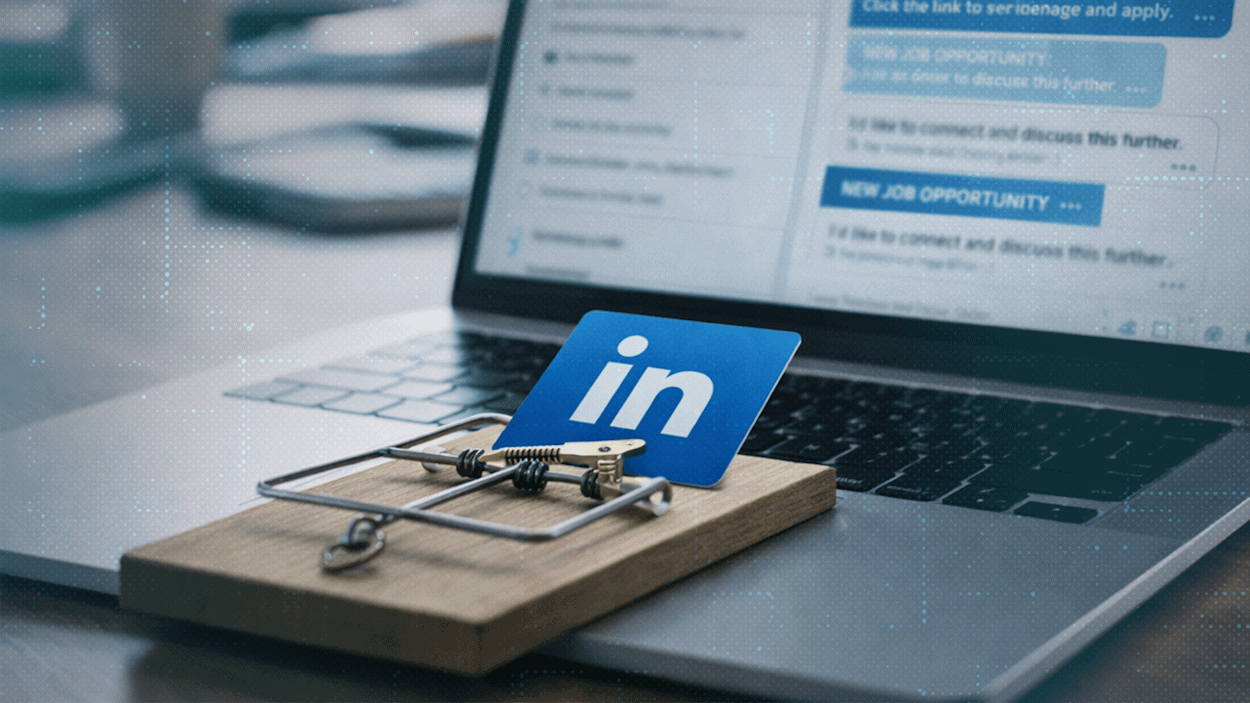
Hey there, have you ever thought about how LinkedIn can be a goldmine of corporate information? Well, think again before trusting everyone you come across on the platform.

16 Jan 2026
•
,
4 min. read
Let’s talk about a recent incident involving Britain’s Security Service and their alert to members of parliament about a foreign intelligence scheme on LinkedIn. The platform has been a target for threat actors seeking insider information, leading to a significant government initiative to combat espionage threats.
This isn’t the only case of LinkedIn being misused for malicious purposes. It’s a hub of valuable corporate data that can fuel fraud and threat campaigns. It’s time for professionals to understand the risks associated with digital networking.
Why is LinkedIn so appealing to attackers?
With over one billion members worldwide, LinkedIn is a prime target for both state-backed and financially motivated threat actors. But why do they find it so attractive? Here are a few reasons:
- Rich source of information: Threat actors can gather valuable intelligence about key individuals in targeted companies, their roles, relationships, and projects. This information is crucial for spear-phishing and BEC fraud.
- Credibility and cover: LinkedIn’s professional setting makes it easier for threat actors to connect with potential victims. Executives and employees are more likely to engage with messages on LinkedIn than unsolicited emails.
- Bypassing traditional security: Messages on LinkedIn bypass corporate email systems, making it harder for IT departments to monitor. This lack of oversight opens the door to phishing, malware, and spam attacks.
- Accessibility: Setting up a profile on LinkedIn is simple, making it easy for threat actors to launch large-scale attacks. Compromised credentials also make it easier to impersonate legitimate users.
Common LinkedIn Attacks
Threat actors use various tactics on LinkedIn to carry out their malicious campaigns, including:
- Phishing and spearphishing: Tailored phishing campaigns using information from LinkedIn profiles.
- Direct attacks: Sending malicious links or job offers to deploy malware or recruit insiders.
- BEC: Leveraging LinkedIn data to enhance Business Email Compromise attacks.
- Deepfakes: Creating deepfakes from LinkedIn videos for scams.
- Account hijacking: Taking over user accounts for follow-on attacks.
- Supplier attacks: Targeting partners of a company for secondary attacks.
Examples of threat groups exploiting LinkedIn include Lazarus Group, ScatteredSpider, and the “Ducktail” spearphishing campaign.
Protecting Yourself on LinkedIn
LinkedIn threats pose a challenge for IT security, but there are steps you can take to stay safe. Incorporate LinkedIn threat scenarios into security awareness training, avoid oversharing on the platform, and be vigilant against fake accounts and phishing attempts.
Ensure regular patching, use trusted security software, enable multi-factor authentication, and provide targeted training for executives who are often prime targets. Remember, even on a trusted network like LinkedIn, not everyone has good intentions.