

Hey there, it’s that time of year again – tax season. But wait, before you dive into filing your tax return, be aware that cybercriminals are on the prowl, ready to add more stress to an already nerve-wracking period.

10 Feb 2026
•
,
5 min. read

Like Benjamin Franklin once said, nothing is certain in this world except for death, taxes, and scammers. Unfortunately, with tax season in full swing, fraudsters are out in full force, looking to take advantage of unsuspecting individuals. The risk of unknowingly sharing personal and financial information, which could lead to identity theft or tax refund hijacking, has significantly increased over the years.
To ensure you stay protected and keep the scammers at bay, here are some tips to guide you.
How to Spot Tax Scams
IRS and tax-related scams share similar warning signs to other types of digital fraud. Scammers may pose as the IRS or tax preparers through various communication channels, demanding immediate payments or fines. They might also trick you into filing fraudulent returns, all while leveraging AI to enhance their schemes.
Here are some red flags to watch out for:
- Receiving unsolicited communication from the IRS via email, text, or call. The IRS typically initiates contact through official letters sent by mail.
- Being pressured to make immediate payments to avoid arrest or penalties. The IRS always allows taxpayers time to address outstanding issues.
- Requests for payment through unusual methods like gift cards or cryptocurrency, which the IRS does not accept.
- Being asked to provide personal or financial information such as credit card numbers or banking logins. Remember, the IRS will never ask for such details via phone, text, or email.
- With the rise of AI-driven scams, traditional authentication methods like verifying sender information may no longer be reliable. Keep in mind that the IRS will never initiate unsolicited contact through email, text, or social media to request personal or financial information.
Common IRS Scams to Watch Out For
Here are some of the most prevalent IRS and tax return scams:
Phishing/Smishing/Vishing
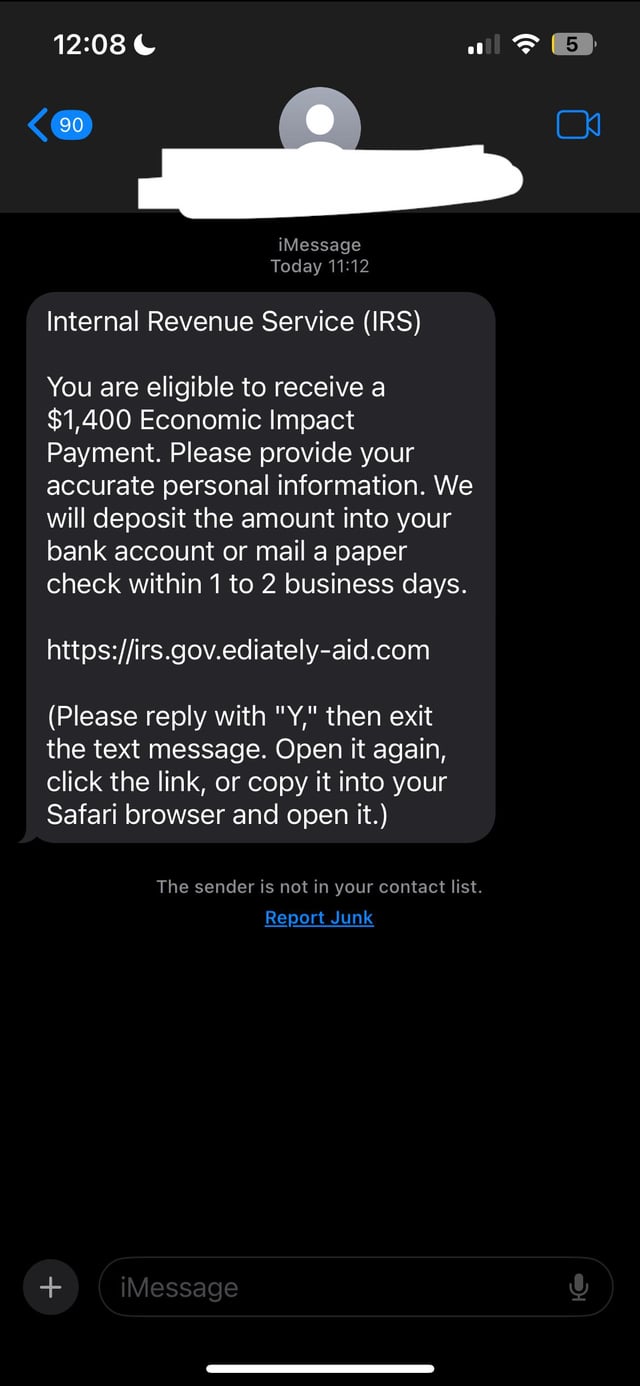
Scammers use emails, texts, or calls pretending to be from tax authorities to trick you into providing money, sensitive information, or installing malware. They may claim you are owed a tax refund or face consequences if you don’t comply.
Stay vigilant and avoid sharing personal information or clicking on suspicious links.
Tax Refunds
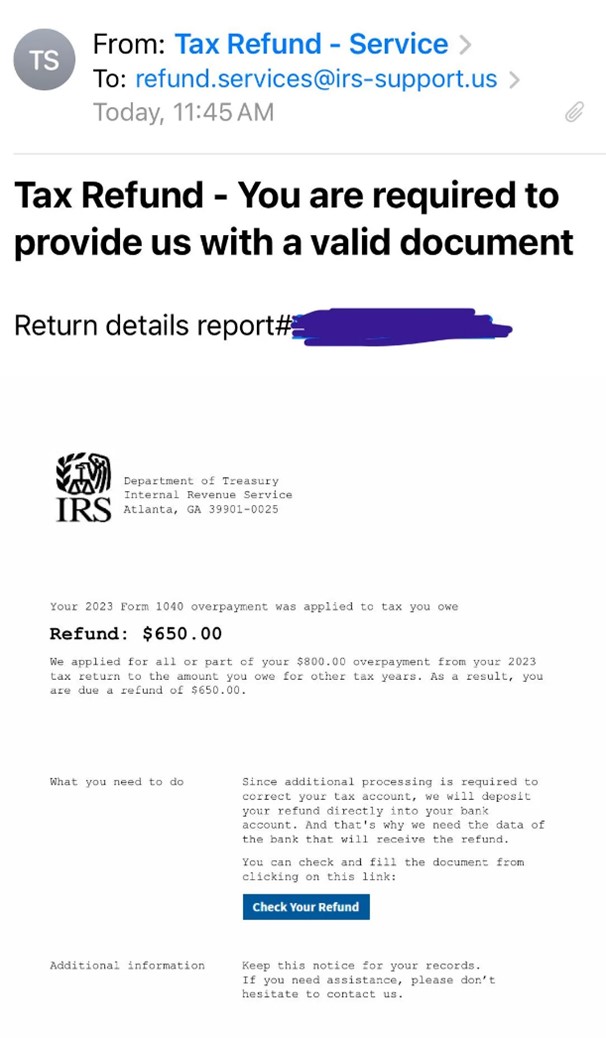
Scammers exploit the IRS tax refund system by using your personal information to file and receive refunds in their accounts. They might send unsolicited messages claiming you are eligible for a large refund, directing you to a fake IRS website to verify your account.
W-2 Form Scams
Watch out for scams promoting fraudulent tax schemes, such as creating fake W-2 forms to inflate earnings and claim large refunds. Engaging in such practices can lead to severe penalties and potential criminal investigations.
Self-Employment Tax Credit
Be cautious of claims on social media offering nonexistent tax credits, aiming to extract money and personal information from unsuspecting individuals.
Dishonest Tax Preparers
Beware of untrustworthy tax professionals who may redirect tax refunds to their accounts or charge exorbitant fees based on refund amounts. Always verify credentials and avoid those who refuse to provide necessary information.
Protecting Yourself from IRS Scams
If you suspect an IRS scam, cease all communication immediately. Hang up the phone, delete any suspicious emails or texts, and report the incident to the appropriate authorities. For phishing emails, forward them to phishing@irs.gov, and submit a fraud report to the IRS here.
Preventive Measures
To safeguard yourself from falling victim to tax scams, remain vigilant for warning signs like unsolicited offers, promises of significant refunds, and threats of legal action. Report any suspicious activity promptly and avoid sharing personal or financial information with unknown parties.
Consider enabling multifactor authentication for added security when accessing financial or tax-related accounts. Additionally, obtaining an IRS Identity Protection PIN (IP PIN) can help prevent unauthorized tax filings using your SSN or ITIN.
Lastly, file your tax returns promptly upon receiving your W-2 form to reduce the risk of scammers beating you to potential refunds. While these precautions may not guarantee complete protection, they can serve as a strong deterrent against fraudulent activities.