1
Hey there, folks! Have you ever thought about how AI tools can be used for both good and malicious purposes? Well, let me share a fascinating insight with you. Recently, researchers uncovered a new attack strategy that leverages AI to sneakily exfiltrate data through images. This attack combines image scaling vulnerabilities in AI systems with prompt injection, showcasing the potential dangers in the digital landscape.
Exploring the Fusion of Prompt Injection Attacks and Image Scaling
Picture this – researchers at Trail of Bits, a cybersecurity firm, delved into the realm of prompt injection attacks exploiting image scaling in AI tools. These attacks can range from innocuous activities like launching an app to more sinister deeds like extracting sensitive data, all without raising any alarms.
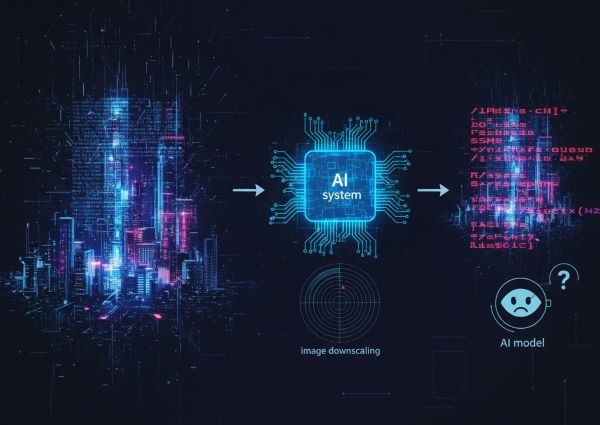
Image scaling attacks, initially showcased by researchers at Technische Universität Braunschweig, Germany, back in 2020, involve manipulating the image scaling process of AI systems. When AI systems process images, they downscale them for efficient processing before feeding them to the model. An adversary could exploit this downsizing to influence how the model interprets the image. In the case of Trail of Bits researchers, they utilized this image scaling flaw for prompt injection attacks.

Source: Trail of Bits
In their experiment, the researchers embedded a malicious prompt within an image, ensuring its invisibility at full scale. However, when an AI system rescaled the image, the altered resolution made the prompt visible. Once processed by the AI model, the prompt deceived the model into interpreting it as a command, leading to the execution of the specified malicious action without the user’s knowledge.
To demonstrate this attack, they targeted the Gemini CLI with the default Zapier MCP server configuration. By uploading an image containing a hidden prompt, they successfully extracted user data from Google Calendar to a designated email address.
If you’re intrigued and want to dive deeper, check out the researchers’ detailed explanation in their blog post.
Are Your AI Systems Vulnerable to This Threat?
The researchers affirm that this attack, with slight tweaks tailored to the target AI model, can be effective against most systems, including:
To facilitate further exploration, the researchers have graciously released an open-source tool named “Anamorpher” on GitHub. This tool, equipped with a Python API, enables users to visualize attacks on multimodal AI systems. Currently in beta, it generates images specifically crafted for multimodal prompt injections upon downscaling.
Protective Measures to Safeguard Your AI Systems
The researchers advise against relying solely on limiting downscaling algorithms to thwart these attacks, given their broad impact. Instead, they suggest imposing restrictions on upload dimensions and avoiding image downsizing. Furthermore, ensuring an accurate preview of the image visible to the model could help detect any covert prompt injections during image uploads.
Additionally, they stress the importance of implementing robust defense mechanisms to counter multimodal prompt injection attacks, such as enforcing user confirmation before executing any text-based instructions embedded within images.
We’re eager to hear your perspectives on this intriguing topic, so feel free to share your thoughts in the comments below.
Stay in the loop with real-time updates on this post category directly to your device. Subscribe now for the latest news.