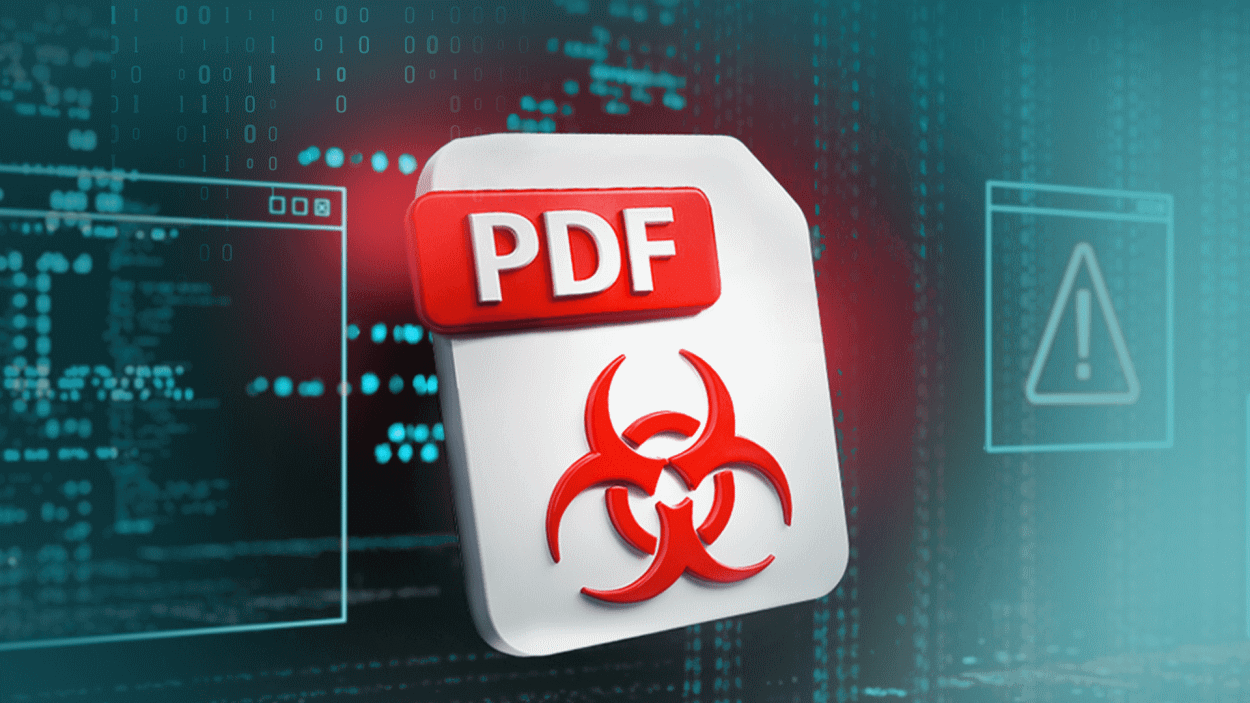
Hey there! Did you know that looks can be deceiving? That familiar icon you see could actually be hiding malware designed to steal your data and money.

06 Oct 2025
•
,
5 min. read

Let’s talk about PDF files. They have become a part of our daily digital lives, making it easy to share and create documents. But did you know that they can also be the perfect disguise for cyber threats?
At first glance, PDF files may seem harmless. But they are often used as lures in social engineering campaigns and other sophisticated attacks. In fact, recent ESET telemetry shows that PDFs are among the top file types used in malicious campaigns.
Unveiling the Deception
Booby-trapped PDFs often arrive as email attachments or links in phishing messages. These messages are designed to trigger emotions like urgency, fear, or curiosity to get you to open the file or click a link.
The attack techniques can vary, from embedded scripts to exploiting vulnerabilities in PDF readers. Attackers may even disguise files to look like PDFs when they are actually scripts or executables.
For example, there was a campaign distributing the Grandoreiro banking trojan disguised as a PDF file. Once opened, it unleashed malware that stole banking credentials.
Spotting the Wolf
So, how can you spot a suspicious PDF? Look out for misleading file names, unexpected email addresses, or files compressed inside ZIP or RAR archives. If something seems out of place, it’s best to stay cautious.
Taking Precautions
If you receive a suspicious PDF, resist the urge to open it immediately. Verify the sender, check the file extension, and scan it with security software before opening. And if you suspect you’ve opened a malicious PDF, disconnect from the internet and run a full computer scan.
Stay Vigilant
Remember, cybercriminals will continue to use PDFs to exploit trust. Always be cautious with unexpected files and rely on trusted security tools to protect your data and devices.