
Anthropic Accuses Chinese AI Labs of Coordinated Distillation Attacks
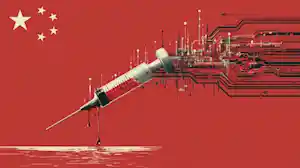
Anthropic made headlines by accusing three prominent Chinese AI laboratories – DeepSeek, Moonshot AI, and MiniMax – of orchestrating industrial-scale campaigns to siphon capabilities from its models. These labs allegedly used fraudulent accounts to engage with Anthropic’s models in violation of terms of service.
The campaigns, according to Anthropic, provide concrete evidence of foreign competitors using distillation to accelerate their AI research, bypassing years of development and significant investments. The company emphasized the urgent need for collective action to address this issue.
This revelation comes amidst escalating tensions between American and Chinese AI developers, with implications for the ongoing debate around export controls on advanced AI chips. Anthropic has been vocal about restricting chip sales to China, linking Monday’s accusations to this policy stance.
Understanding AI Distillation and Its Implications
Distillation is a process where knowledge from a larger AI model (teacher) is used to train a smaller, more efficient model (student). While a legitimate training method, distillation can be exploited for intellectual property extraction. This technique has become a flashpoint in the global AI race.
Anthropic’s accusations shed light on deliberate and large-scale efforts by Chinese labs to extract intellectual property through distillation attacks. The company detailed how these labs targeted specific capabilities of its models, such as reasoning, tool use, and coding.
The use of proxy networks and complex architectures enabled these labs to circumvent access restrictions and engage in distillation attacks. Anthropic framed these attacks as a national security threat, highlighting risks posed by the misuse of distilled models in military and surveillance applications.
Implications and Responses to Distillation Attacks
Anthropic outlined a defensive response to combat distillation attacks, including the development of detection systems and enhanced security measures. The company emphasized the need for industry-wide collaboration and policy interventions to address this issue.
The disclosure is expected to impact ongoing policy debates and regulatory actions, including discussions around chip export controls and bans on specific AI labs. The AI industry faces a new reality where API security is crucial in safeguarding intellectual property and preventing unauthorized access.
Ultimately, the response to these distillation attacks will shape the future of the AI industry and determine how companies navigate the evolving landscape of intellectual property protection and national security concerns.