

Are you tired of dealing with aggressive ads on your phone, experiencing slow performance, or noticing unusual app behavior? Let’s tackle this issue together.

08 Aug 2025
•
,
5 min. read

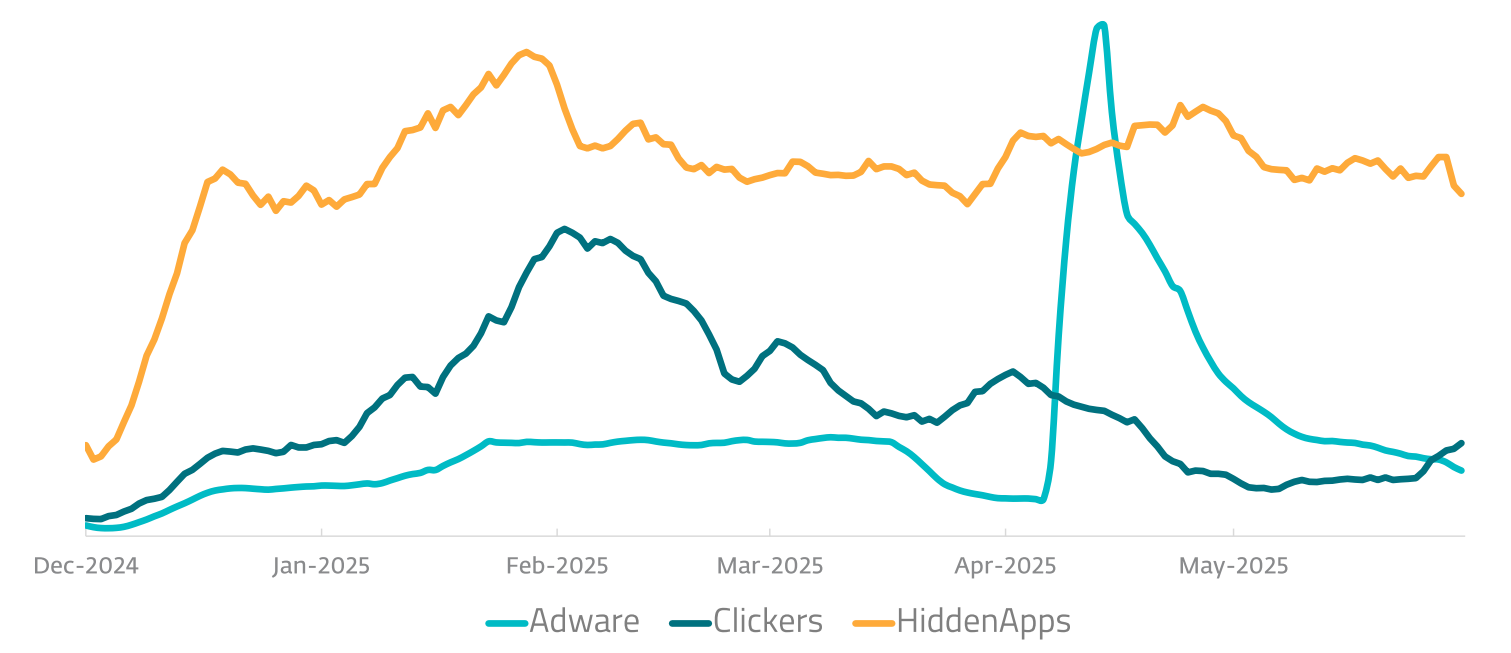
Let’s talk about the not-so-friendly things that could be lurking on your smartphone. From spyware turning your phone into a surveillance device to Trojans stealing your banking information, there’s a lot to be cautious about. One common threat, adware, has seen a 160% increase in detections in the first half of 2025, as reported in ESET’s latest threat report. Keep reading to understand more about adware and how to protect your Android device from it.
What exactly is adware and how does it impact your device?
Adware falls into a grey area in the realm of threats. It can range from legitimate free software with ads that are hard to disable to potentially unwanted applications that display intrusive ads and make unauthorized changes to your device settings. Some adware may even go as far as collecting personal data for malicious purposes.
Essentially, “adware” refers to any software that shows unwanted and potentially harmful ads on your device without your permission. These ads can take various forms, such as pop-ups, in-browser ads, banner ads, push notifications, or full-screen content like videos. The primary goal for developers is to make money by getting users to install the adware and interact with the ads.
Moreover, adware can:
- Track your online behavior to customize ads
- Collect personal information to sell to third parties
- Engage in click fraud schemes by clicking on ads without your knowledge (known as “Clickers”)
- Conceal itself after installation to prevent removal (referred to as “Hidden Apps”)
- Consume your data allocation
- Reduce your device’s performance
- Expose your device to malware
How does adware find its way onto your device?
Adware creators have developed several tactics to deceive users into installing their malicious software. These tactics include:
- Disguising the adware as a legitimate app
- Bundling it with free software
- Exploiting vulnerabilities in your device’s software or operating system through drive-by downloads
- Tricking users into clicking on misleading or malicious ads
- Presenting fake pop-ups claiming your device is infected with malware
- Sending phishing links through email, text, or social media messages
Evading detection techniques
Adware developers employ various strategies to avoid detection by users and security tools. They may hide the adware within seemingly harmless free software or disguise it as a legitimate app. The code could be encrypted to evade basic antivirus tools or regularly updated using polymorphic techniques to evade detection. Additionally, developers may use anti-analysis methods to make it challenging for security experts to understand their adware’s functionality.

Meet Kaleidoscope
One particularly sophisticated adware variant recently discovered by ESET is dubbed Kaleidoscope. This Android-based ad fraud scheme uses an “evil twin” tactic where developers release two identical versions of an app. The benign version is distributed on official app stores, while the malicious twin is circulated on unofficial third-party stores. Deceptive ads direct users to the malicious version.
Both versions share the same app name and unique identifier (app ID). This enables the fraudulent ad impressions from the malicious version to appear legitimate to advertisers, ensuring a continuous revenue stream for developers. Meanwhile, users face a barrage of ads that degrade their device’s performance. In the first half of 2025, this adware accounted for 28% of detections in the Android adware category.
How can you tell if your device has adware?
To determine if your Android device may be compromised by adware, watch out for these warning signs:
- Sluggish performance and frequent system crashes
- New extensions and toolbars appearing without your consent
- Websites not loading correctly
- Unwanted software present on your device
- Excessive and intrusive ads disrupting your experience
- Your browser homepage changing unexpectedly
- Rapid battery depletion
- Unexplained high data usage
Protecting your device from adware
Thankfully, there are several measures you can take to reduce the risk of adware infecting your device. The best defense is prevention. Consider the following tips:
- Download apps only from reputable developers and check their ratings and reviews.
- Read app reviews before installing them.
- Stick to the Google Play store and avoid third-party app stores where malware is more prevalent.
- Avoid clicking on ads or pop-ups that may be malicious.
- Regularly update your operating system and browser to address potential vulnerabilities that adware could exploit.
- Be cautious of phishing attempts and avoid clicking on links in unsolicited emails, texts, or social messages.
- Install security software from a trusted provider, keep it up to date, and enable PUA detections if available.
If you suspect your device is already infected with adware, disconnect from Wi-Fi and mobile data, boot into Safe Mode (the process varies by device), navigate to Settings > Apps and notifications > See all apps, and uninstall any suspicious apps. Clearing your browser cache and cookies may also be necessary.
Alternatively, run a scan with reputable security software like ESET Mobile Security. Following the recommendation to enable PUA detections can significantly reduce the risk of adware on your device.